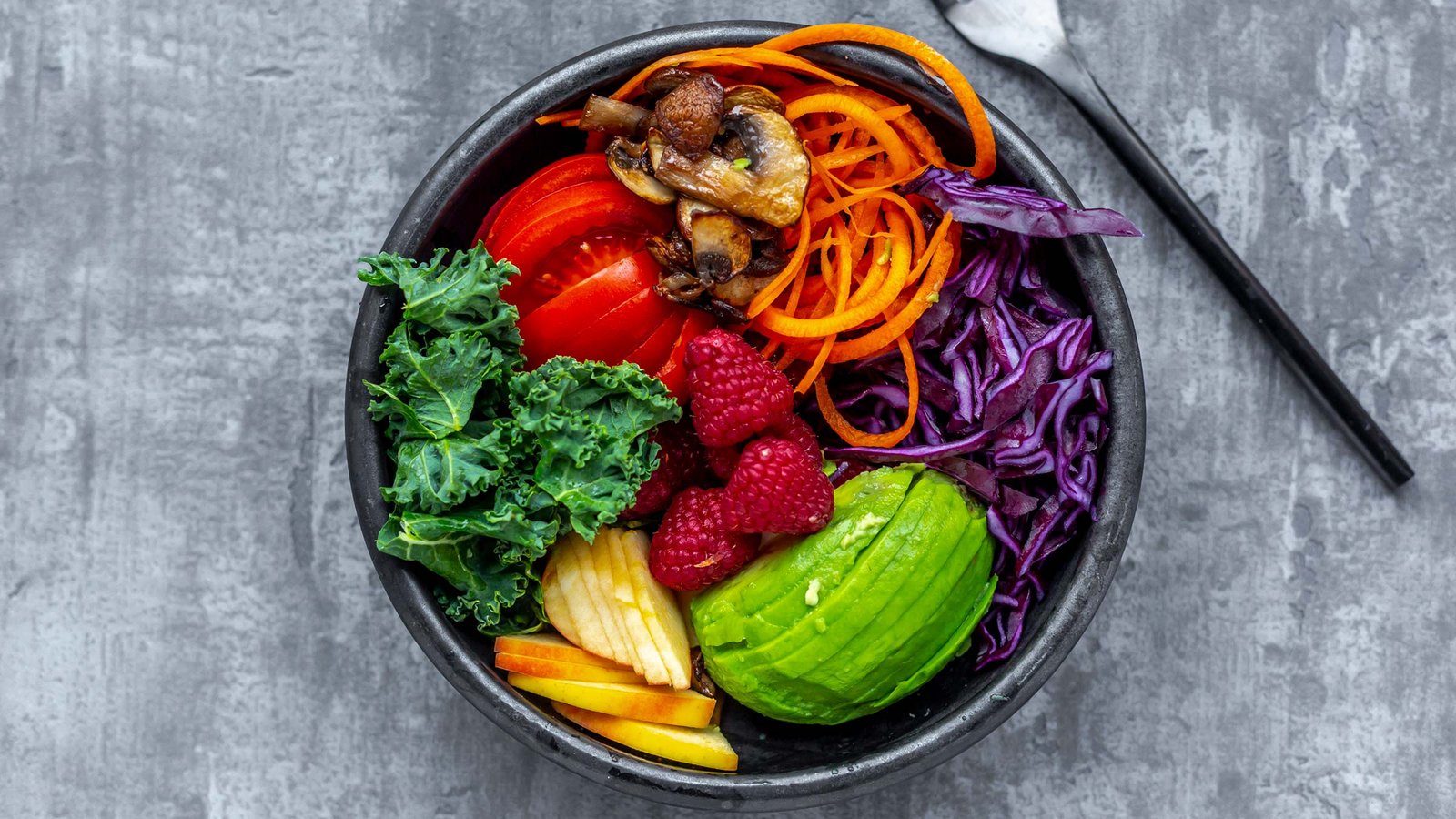
Walk down any grocery aisle and you’ll see it: the same apple, sitting in two bins, with the organic version priced noticeably higher. It’s a choice millions of shoppers make every week, often based on a simple assumption — that organic must be healthier. But what does the actual research say, and is the price premium worth it?
This guide breaks down what “organic” really means, what large nutrition reviews have actually found when comparing organic and conventional food, where a genuine difference does show up, and how to decide what’s worth your grocery budget.
What “Organic” Actually Means
In the United States, food labeled “USDA Organic” has to meet specific farming standards. Crops must be grown without synthetic pesticides, synthetic fertilizers, sewage sludge, irradiation, or genetic engineering. Organic livestock must have access to the outdoors, eat organic feed, and cannot routinely receive antibiotics or growth hormones.
What organic certification does not mean is “pesticide-free.” Organic farming permits a specific list of natural and approved pesticides — they’re simply different from the synthetic ones used in conventional farming, not absent altogether. It also doesn’t automatically mean local, fresher, or less processed; an organic cookie is still a cookie.
Is Organic Food More Nutritious?
This is the question most people are really asking, and it’s been studied extensively. A widely cited 2012 review from Stanford University researchers analyzed over 200 studies comparing the nutrient content of organic and conventional foods. Their conclusion: there wasn’t strong evidence that organic foods are significantly more nutritious overall. A separate, large-scale review commissioned by the UK’s Food Standards Agency reached a similar conclusion, finding no meaningful nutritional differences after reviewing decades of published research.
That doesn’t mean the two are identical in every respect. A few individual studies have found small, isolated differences — for example, some research has pointed to modestly higher vitamin C levels in certain organic vegetables, or higher omega-3 levels in organic milk. But these findings haven’t been consistent across studies, and major reviewers have generally concluded that any such differences are too small and inconsistent to be considered a meaningful health advantage on their own.
In short: if your main goal in buying organic is “more vitamins and minerals,” the evidence doesn’t strongly support that being the outcome.
Where Organic Food Does Show a Measurable Difference
Nutrient content isn’t the only angle researchers have looked at. Two areas do show a more consistent difference between organic and conventional food:
Pesticide residue exposure
Multiple reviews, including the Stanford analysis, have found that organic produce carries a lower risk of detectable pesticide residue compared to conventionally grown produce. It’s worth noting that both organic and conventional produce sold in the US and similar countries are generally required to stay within legal safety limits — so this is a difference in the amount of residue detected, not necessarily a difference in whether food is “safe” versus “unsafe” by regulatory standards. Still, for people who specifically want to minimize pesticide exposure, this is the strongest, most consistent evidence in organic food’s favor.
Antibiotic-resistant bacteria in meat and poultry
Because organic livestock standards restrict routine antibiotic use, some research has found lower rates of antibiotic-resistant bacteria on organic chicken and pork compared to conventionally raised versions. This is a public health consideration that goes beyond individual nutrition — antibiotic resistance is a wider concern for how infections are treated across the population.
What Buying Organic Doesn’t Guarantee
It’s worth being clear-eyed about what the “organic” label doesn’t promise:
- It doesn’t mean lower calories, sugar, or sodium. Organic snack foods, sweets, and processed products follow the same nutrition rules as any other packaged food.
- It doesn’t mean zero pesticides. Organic farming still permits certain approved pesticides.
- It doesn’t guarantee better taste or freshness. Those depend far more on how and when the food was grown, transported, and stored.
- It doesn’t automatically mean a smaller environmental footprint — the picture there varies a lot by crop, region, and farming method, and is a separate question from personal health.
So, Should You Buy Organic?
Every major review on this topic converges on one consistent point: the type or amount of produce and whole foods you eat matters far more for your health than whether that produce happens to be organic. Eating a variety of fruits and vegetables — organic or conventional — is one of the most well-supported dietary habits for long-term health. Choosing conventional produce over skipping fruits and vegetables altogether because organic feels too expensive is, by the weight of the evidence, the better choice for your health.
With that said, there are legitimate, personal reasons to choose organic that go beyond nutrient content:
- Minimizing pesticide exposure — a reasonable priority if you’re pregnant, feeding young children, or simply prefer to reduce it.
- Reducing antibiotic-resistant bacteria exposure — particularly relevant for meat and poultry purchases.
- Supporting specific farming practices — animal welfare standards, regenerative or lower-synthetic-input agriculture, or supporting smaller organic farms.
- Personal preference — some people simply prefer the taste or peace of mind, and that’s a valid reason on its own.
A Practical Way to Decide What’s Worth Buying Organic
If budget is a factor — and for most households, it is — you don’t have to make an all-or-nothing decision. A commonly used approach is to prioritize buying organic for foods you eat with the skin on, where pesticide residue has more direct contact (think berries, leafy greens, and soft-skinned fruits), and feel more comfortable buying conventional for produce with a thick peel you remove before eating, like avocados, bananas, or onions, since the edible portion has less direct exposure.
For meat, poultry, and dairy, if pesticide and antibiotic exposure is your main concern, that’s where the organic label tends to carry the most consistent evidence behind it — so it may be worth prioritizing your organic budget there over less-impacted packaged goods.
How to Read Organic Labels at the Store
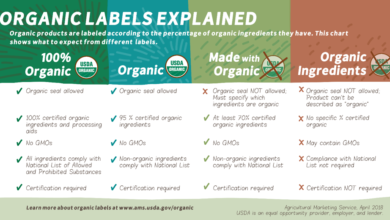
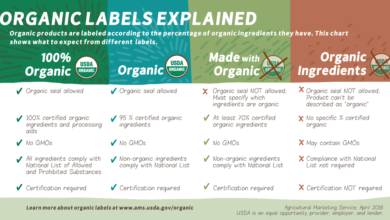
Not every product that mentions “organic” on the front of the package meets the same standard. In the US, there are a few tiers worth knowing:
- “100% Organic” — every ingredient is certified organic.
- “Organic” — at least 95% of ingredients are certified organic.
- “Made with organic [ingredient]” — at least 70% of ingredients are organic; the product can’t carry the USDA Organic seal.
- Products with fewer than 70% organic ingredients can only list specific organic ingredients on the side panel, not claim “organic” on the front.
Looking for the actual USDA Organic seal, rather than just the word “organic” in the product name or marketing copy, is the most reliable way to confirm a product meets the full certification standard rather than a partial one.
Organic vs. Local vs. Non-GMO: Clearing Up Common Mix-Ups
These three labels get lumped together in everyday conversation, but they mean different things, and none of them automatically implies the others.
- Organic refers to how the food was grown or raised, under the farming standards described above. It says nothing about where it was grown.
- Local refers to distance from farm to store, not farming method. A local farm can use conventional methods, and an organic product can be shipped from across the world.
- Non-GMO means the food wasn’t produced using genetic engineering. Organic certification does prohibit GMOs, but a product can be labeled “Non-GMO” without being organic — the two labels overlap but aren’t interchangeable.
Understanding this distinction matters because each label addresses a different priority — freshness and carbon footprint (local), farming inputs and pesticide use (organic), or breeding method (non-GMO). None of them, on their own, is a stand-in for “healthier.”
Common Questions About Organic Food
Is organic milk or meat worth the extra cost?
This is arguably where organic has the clearest evidence-backed benefit, given the research on lower antibiotic-resistant bacteria rates in organic poultry and pork. If your budget only stretches to a few organic purchases, animal products are a reasonable place to prioritize.
Does washing conventional produce remove pesticide residue?
Rinsing produce under running water and gently scrubbing firmer items can reduce surface residue and also removes dirt and bacteria, which is worth doing regardless of whether the produce is organic or conventional. It won’t eliminate all residue, but it’s a simple, low-cost habit either way.
Is organic baby food necessary?
Some parents choose organic specifically to minimize pesticide exposure during infancy, given that this is an area with reasonably consistent supporting evidence. This is a personal decision best made alongside your child’s pediatrician, particularly if there are specific health considerations involved.
The Bottom Line
Organic food isn’t a nutritional upgrade in the way marketing sometimes suggests — major reviews consistently find no strong evidence that it’s significantly more nutritious than conventional food. Where it does show a real, evidence-backed difference is in lower pesticide residue and lower antibiotic-resistant bacteria in meat. Beyond that, the decision to buy organic comes down to your budget, your priorities, and what matters to you personally — not a guaranteed health advantage.
The one habit that matters more than the organic label either way: eating enough fruits, vegetables, and whole foods in the first place.