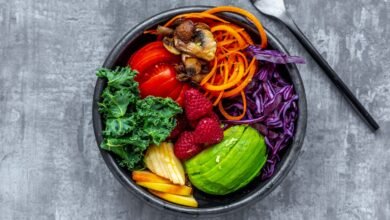
“Eat healthy” is easy advice to give and harder to actually put into practice day to day. This guide breaks down what a genuinely balanced daily diet looks like, practical tips for making better food choices without overcomplicating things, and how to build habits that hold up on busy, real-life days — not just when you have time to meal prep.
What Should You Be Eating Every Day?
A genuinely balanced daily diet centers on a few consistent categories rather than a rigid meal plan:
- Fruits and vegetables — aim for a variety of colors and types across the day, since different produce offers different vitamins, minerals, and fiber.
- Whole grains (oats, brown rice, whole wheat, quinoa) over refined versions, for steadier energy and more fiber.
- Lean protein (poultry, fish, eggs, legumes, tofu) at each meal, which supports fullness and muscle maintenance.
- Healthy fats in moderate amounts (olive oil, nuts, seeds, avocado, fatty fish) for hormone health and nutrient absorption.
- Water as your primary beverage, with sugary drinks and excess caffeine kept to a minimum.
You don’t need to hit an exact ratio of these every single day — consistency over weeks matters far more than any individual day being “perfect.”
Why Consistency Matters More Than Perfection
Most of the measurable health benefits linked to diet quality — lower risk of heart disease, better blood sugar control, healthier weight maintenance — come from dietary patterns sustained over months and years, not from any individual day of eating. This is genuinely good news: it means one indulgent meal, a skipped vegetable, or a fast-food day doesn’t meaningfully change your health trajectory. What matters is what your eating looks like on a typical week, which is why building a few reliable, repeatable habits tends to produce better long-term results than chasing a perfect diet you can only maintain for a few days at a time.
Practical Tips for Making Healthier Food Choices
Build meals around protein and vegetables first
Deciding what’s for dinner by starting with a protein source and a vegetable, then adding a carbohydrate, naturally leads to more balanced meals than starting with whatever’s most convenient.
Read ingredient lists, not just marketing claims
Labels like “natural,” “light,” or “made with real fruit” aren’t regulated the same way as nutrition facts. Checking the ingredient list and nutrition panel gives a much more accurate picture than front-of-package claims.
Keep easy, healthy options visible and accessible
Pre-washed vegetables, fruit on the counter, and pre-portioned snacks reduce the friction between “wanting to eat well” and actually doing it, especially on busy or tired days when convenience wins by default.
Don’t grocery shop hungry
This small, well-known tip holds up — shopping while hungry is consistently linked to more impulsive, less healthy purchases.
Plan a loose structure, not a rigid script
Knowing your general plan for the week (a few go-to breakfasts, a rotation of dinners) reduces decision fatigue without requiring you to follow an exact meal-by-meal plan every day.
Common Pitfalls Worth Watching For
- Assuming “healthy-sounding” always means healthy — granola bars, smoothies, and dried fruit can be calorie-dense and high in added sugar despite a health-focused image.
- Skipping meals to compensate for a later indulgence — this often backfires by increasing hunger and overeating later.
- Treating “eating healthy” as all-or-nothing — one less-than-ideal meal doesn’t undo a generally good pattern, and treating it that way often leads to giving up entirely.
- Over-restricting instead of building better defaults — sustainable healthy eating is usually about improving your typical choices, not eliminating entire categories of food.
Making It Work on Busy Days
The days you’re busiest are exactly when healthy eating tends to slip, so it’s worth having a few low-effort fallback options ready: a frozen vegetable and pre-cooked grain bowl, canned beans with pre-washed greens, eggs with whatever produce is on hand, or a simple protein and salad combination from a grocery store deli counter. These aren’t glamorous meals, but having 2-3 “good enough” fallback options prevents busy days from turning into consistently poor eating patterns.
Common Questions
Do I need to eat a specific number of meals per day?
No — meal frequency (three meals, two meals, several small meals) doesn’t have a strong independent effect on health outcomes for most people. What matters more is total intake and food quality across the day, so choose a structure that fits your schedule and appetite rather than following a specific number for its own sake.
Is it okay to have treats regularly?
Yes — a sustainable approach to eating well generally includes room for treats rather than eliminating them entirely, which tends to make an eating pattern easier to maintain long-term. The relevant factor is overall pattern and portion, not whether any single food is technically “allowed.”
How do I know if my diet is actually balanced?
A simple gut check: over a typical week, are you regularly including fruits and vegetables, a protein source at most meals, and mostly whole rather than heavily processed foods, while staying reasonably hydrated? If yes most days, you’re likely in a reasonable range without needing to track every gram.
Related Reading
- Portion Control Guide for Real Life Eating
- What Foods Lower Inflammation Best?
- Best Foods for Heart Health
The Bottom Line
Making healthier food choices doesn’t require a complicated system — it comes down to consistently prioritizing whole foods, protein, and produce, reading past marketing claims, and having realistic fallback options for busy days. Small, repeatable habits, sustained over time, do more for long-term health than any single “perfect” day of eating.