A meal can look healthy and still work against your goals if the portions keep creeping up. That is why a practical portion control guide matters. You do not need a food scale at every meal or a perfect meal plan to eat better. You need a simple way to notice how much you are eating, adjust it without feeling deprived, and make those choices work in real life.
Portion control gets confused with dieting, but they are not the same thing. Dieting often focuses on what foods are allowed. Portion control focuses on how much you eat, even when the food itself is nutritious. Nuts, olive oil, granola, rice, smoothies, and even healthy restaurant bowls can become easy calorie overload when serving sizes quietly double.
What a portion control guide actually helps you do
A good portion control guide is not about eating tiny meals or staying hungry. It helps you match your intake to your needs. If your goal is weight loss, that usually means creating a gentle calorie deficit without making meals so small that you end up snacking all night. If your goal is maintaining weight, portion awareness helps stop mindless overeating. If you are active and trying to build strength, portion control still matters because under-eating protein or overdoing low-quality extras can slow progress.
This is also where people get tripped up by the difference between a portion and a serving. A serving is the standardized amount listed on a nutrition label. A portion is what you actually put on your plate. Sometimes they match. Often they do not. A bag of chips may contain three servings, but if you eat the whole bag, your portion was the entire package.
That distinction matters because most people do not overeat from lack of discipline alone. They overeat because modern portions are large, distractions are constant, and many foods are easy to consume quickly before fullness catches up.
Start with your plate before you count anything
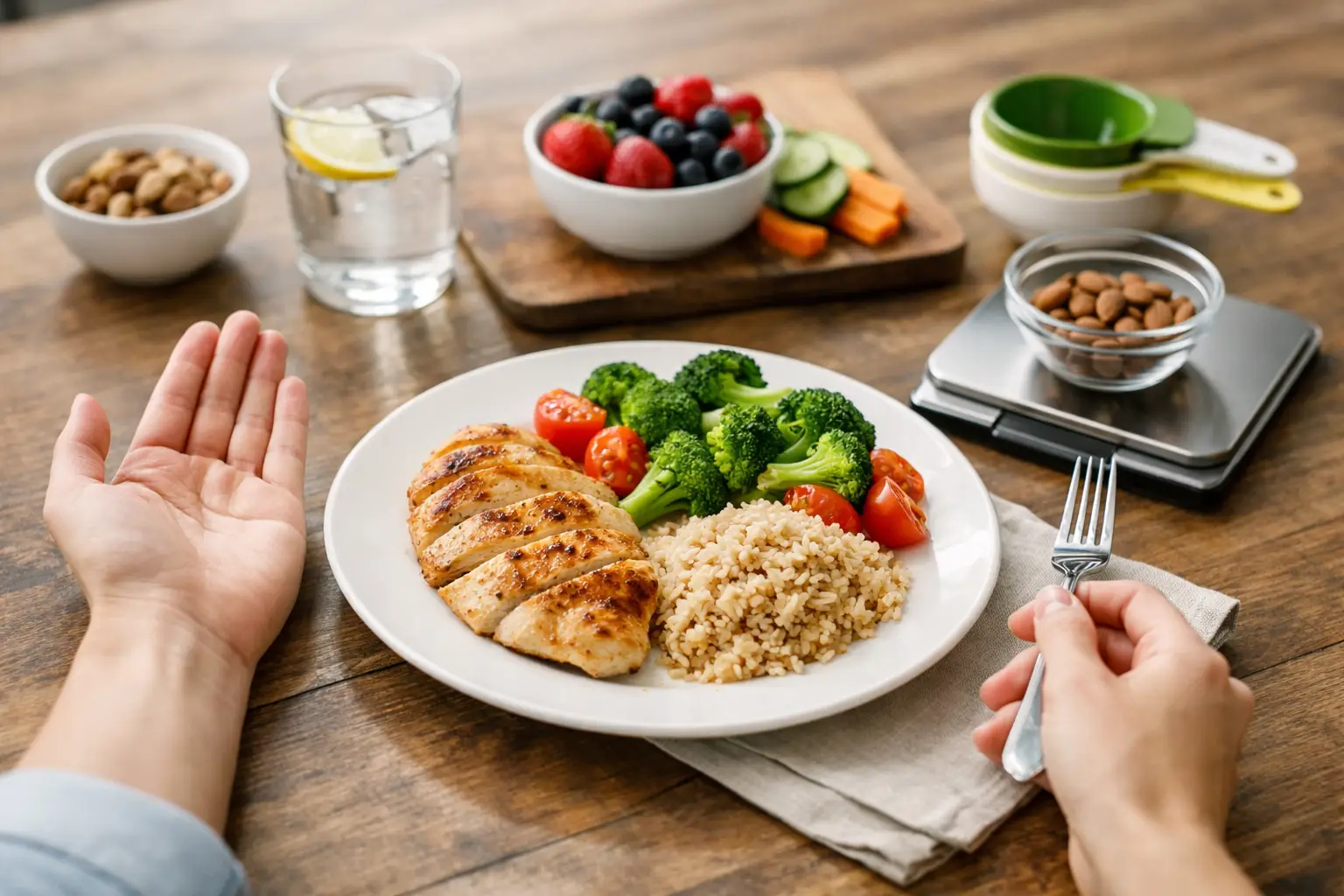
If calorie tracking feels overwhelming, start with visual structure. For many adults, an easy meal-building method is to fill half the plate with non-starchy vegetables, one quarter with lean protein, and one quarter with starches or grains. Add a modest portion of healthy fat based on the meal, such as avocado, nuts, seeds, olive oil, or dressing.
This approach works because it naturally raises fiber and protein while keeping higher-calorie foods in check. It is not a rule that fits every body or every goal, but it is a reliable starting point. Someone training hard may need more carbs. Someone trying to reduce blood sugar spikes may do better with a smaller starch portion and more protein and vegetables. The point is balance, not perfection.
Hand portions can make this even easier when you are eating at home, packing lunch, or ordering out. A palm-sized portion of protein, a fist-sized portion of carbs, one to two fists of vegetables, and a thumb-sized portion of fats is a useful mental shortcut. It will not be exact, but it is often accurate enough to improve your habits without adding stress.
Why healthy foods can still lead to overeating
One of the biggest mindset shifts is accepting that healthy food is not automatically low in calories. Peanut butter is nutritious, but two spoonfuls can quickly turn into four. Trail mix is convenient, but it is also dense. Smoothies can be packed with fruit, protein, and healthy fats, yet still contain more calories than a full meal.
That does not mean you should avoid these foods. It means they deserve awareness. Portion control is especially helpful with calorie-dense foods because small differences add up fast. If you pour cereal directly from the box, drizzle dressing without looking, or snack from a family-size container, it is easy to eat far more than you intended.
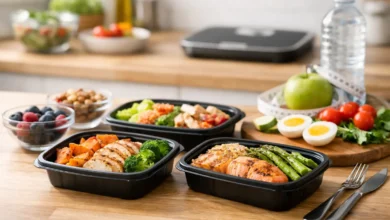
A simple fix is to portion foods before you eat them. Put chips in a bowl instead of taking the bag to the couch. Measure nut butter for a week so your eyes recalibrate. Serve ice cream into a dish instead of eating from the carton. These habits sound small because they are small, and that is exactly why they are sustainable.
Hunger matters more than people think
A portion control guide should never ignore hunger. If your meals are technically controlled but leave you starving, they are probably not working. Hunger usually gets stronger when meals are low in protein, low in fiber, or too small to satisfy you. That is when portion control turns into rebound eating.
The better strategy is to control portions while building meals that stick with you. Protein helps most with fullness, so meals with eggs, Greek yogurt, chicken, fish, tofu, beans, cottage cheese, or lean beef often feel more satisfying than meals built mostly around refined carbs. Fiber also matters. Vegetables, fruit, beans, oats, and whole grains can stretch a meal without adding a huge calorie load.
Eating speed matters too. Fullness is delayed. If you eat fast, you can finish a large portion before your body has a chance to register enough. Slowing down by even a little can help. That might mean sitting at a table, putting your fork down between bites, or pausing halfway through the meal to check whether you are still hungry or just still eating.
The toughest places to manage portions
Restaurants are one of the biggest challenges because portions are often oversized before the meal even starts. You may get a basket of bread, a large entree, and a sugary drink without realizing the total energy hit. A practical move is to decide early. Split the meal, box up part of it, order a protein-heavy option with vegetables, or skip automatic extras that do not really matter to you.
Snacking can be another problem area, especially when it happens out of boredom, stress, or habit. If you regularly lose track during snack time, build more structure around it. Choose one snack, portion it out, and eat it without multitasking. Snacks are not bad. Unplanned, endless grazing is usually the issue.
Weekend eating is where many good weekday habits fall apart. Social meals, takeout, drinks, and looser routines can erase progress quickly. That does not mean weekends need to be strict. It means using a few anchor habits helps, such as prioritizing protein, limiting liquid calories, and staying aware of portions for restaurant meals and treats.
How to use this portion control guide without becoming obsessive
Portion control should make eating feel clearer, not more stressful. If measuring every bite makes you anxious, use looser tools like plate balance and hand portions. If you tend to underestimate intake, a short period of measuring common foods can be useful education. You do not have to do it forever. Often one or two weeks is enough to reveal what your usual portions really look like.
It also helps to think in patterns instead of single meals. One large dinner does not ruin your progress. A consistent habit of oversized dinners might. One dessert is not the problem. Feeling like every treat has to become a cheat day usually is. The goal is steadier choices most of the time.
This is where flexibility matters. A smaller breakfast may feel fine for one person and terrible for another. Some people do best with three full meals. Others prefer two meals and a snack. The best portion control plan is the one you can repeat without white-knuckling your way through the day.
Portion control guide for building better habits
The easiest way to improve portions is to redesign the moments where you usually overeat. Use smaller bowls for calorie-dense snacks. Serve food from the kitchen instead of leaving the pot on the table. Keep protein ready so meals do not turn into random carb-heavy grabs. Check labels on packaged foods you eat often, not to judge yourself, but to learn what a serving really looks like.
You can also build a quick pause into meals. Before getting seconds, wait ten minutes and ask yourself whether you are still hungry, still enjoying the food, or simply not ready for the meal to end. That short break can separate physical hunger from habit.
For many readers, the biggest win is consistency, not precision. If you can make your usual breakfast a little more balanced, your dinner portions a little more realistic, and your snacks a little more intentional, you are already moving in the right direction.
Portion control is not about eating less for the sake of eating less. It is about giving your body enough, not too little and not far beyond what you need. Start with one meal, one habit, or one food that tends to get away from you. Small corrections, repeated often, are what make healthy eating feel possible for real life.