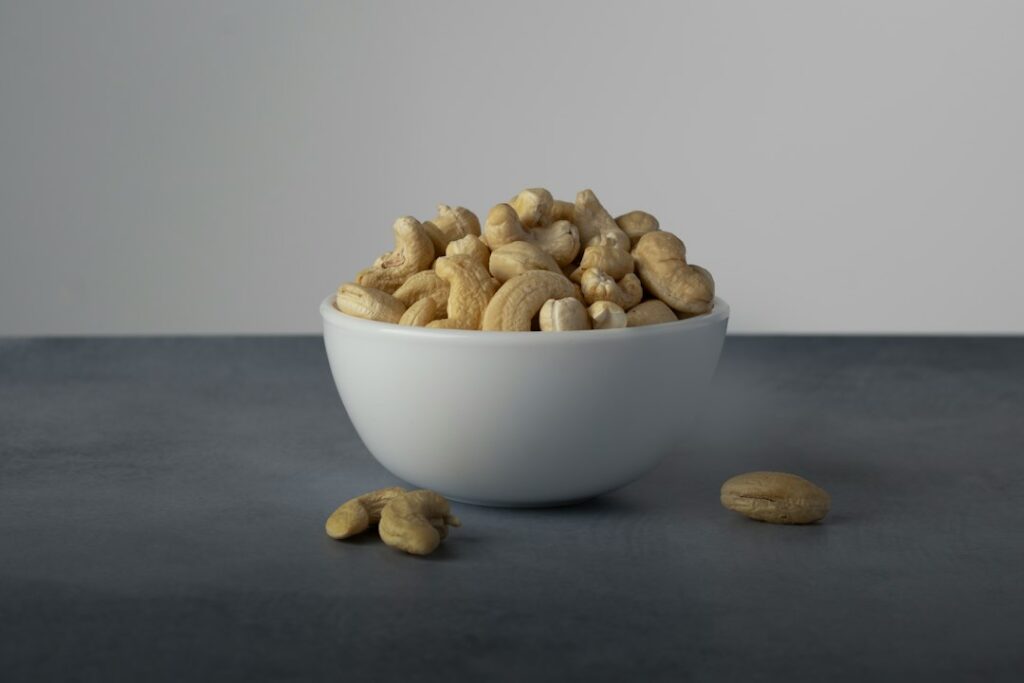
Cashews turn up in curries, trail mixes and afternoon snack bowls. But what can you expect from eating cashews every day? In modest amounts, they add protein, mostly unsaturated fat and valuable minerals to your diet. The portion matters, and so does your allergy history.
Cashew Nutrition per Ounce
One ounce (28 g) is about 18 whole cashews. According to nutrition data from University Hospitals, that serving of raw cashews provides roughly:
| Nutrient | Amount per 1 oz |
|---|---|
| Calories | 157 |
| Protein | 5.2 g |
| Total fat | 12.4 g |
| Carbohydrates | 8.6 g |
| Fiber | 0.9 g |
| Magnesium | 83 mg |
| Zinc | 1.6 mg |
| Copper | 0.62 mg |
Benefits of Eating Cashews Every Day
May Support Heart Health
In a 2017 controlled feeding trial, 51 adults with or at risk of high LDL (“bad”) cholesterol ate 28 to 64 g of cashews daily for four weeks. Harvard Health reports that LDL fell by about 5% compared with a control diet.
The results are not uniform. A 2019 trial listed in this research summary found no significant change in blood lipids. Cashews alone will not prevent heart disease. They work best as a replacement for less healthy snacks, within an overall pattern of heart-healthy foods.
Helps Bones, Muscles and Nerves
Strong bones need more than calcium. Cashews supply magnesium, phosphorus and copper, which also play a part in bone health. Magnesium supports normal muscle and nerve function and helps regulate blood pressure and blood sugar. If you are looking at supplements too, compare magnesium glycinate and citrate.
Supports Immunity and Metabolism
Zinc is important for immune function and cell growth. Copper helps your body use iron and produce energy, while manganese is involved in metabolism.
Keeps You Satisfied
The mix of protein, fat and carbohydrate makes cashews a filling source of energy, which may help curb extra snacking. They are still calorie-dense, so use them in place of other foods rather than on top of them. See more snacks for weight loss.
What About Blood Sugar?
A 12-week trial in 300 Asian Indians with type 2 diabetes linked cashew supplementation with higher HDL cholesterol and lower systolic blood pressure. This does not make cashews a diabetes treatment. For meal ideas, read about foods for blood sugar control.
How Many Cashews Should You Eat a Day?
A sensible portion for most healthy adults is about 1 ounce (28 g), or around 18 cashews. If you eat other nuts the same day, count them toward your total. Anyone on a medically prescribed diet, for example for kidney disease, should ask a doctor or dietitian first.
Cashew Allergy and Other Risks
Cashews are tree nuts. The American College of Allergy, Asthma and Immunology notes that tree nuts are among the allergens most often linked to anaphylaxis, a potentially life-threatening reaction.
- Watch for symptoms: itching or hives, swelling of the lips, tongue or throat, stomach pain, vomiting, diarrhea, trouble swallowing or breathing.
- Act fast: for a severe reaction, use prescribed epinephrine immediately and call emergency services.
- Check related foods: people allergic to cashews may also react to pistachios.
- Get advice: if you have any nut allergy, speak with an allergist before trying cashews.
The Best Way to Eat Cashews
Choose unsalted, plain or dry-roasted cashews rather than salted or oil-fried ones. The “raw” cashews sold in stores have already been heat-treated to remove the shell safely. Add them to oatmeal, yogurt, salads or cooked dishes, or try them with these high protein breakfast ideas. Wondering how they compare with another favorite? Read walnuts vs cashews.
Frequently Asked Questions
Is it safe to eat cashews daily?
For most people without a nut allergy, a small daily portion can fit into a balanced diet.
Can cashews cause weight gain?
They can if they add extra calories to your day. Measuring your portion helps.
The Bottom Line
Eating cashews every day can be a tasty way to get minerals, protein and healthy fats. Keep to about an ounce, choose unsalted versions and avoid them if you are allergic.
This article is for general information and is not medical advice. It draws in part on a lifestyle report by Samakal (in Bengali), which cites TV9.