| Discover the top health trends shaping America in 2026 – from GLP-1 weight-loss drugs to ultra-processed food dangers. Science-backed, actionable, and written for real people. |
Americans are waking up to a new reality in health – and it’s not just about eating salads and walking 10,000 steps anymore. In 2026, the conversation around wellness has taken a dramatic turn, driven by breakthrough medications, alarming research about what we eat, and a growing desire to take control of our bodies before a doctor tells us something is wrong.
Here’s what’s trending, what the science actually says, and what you can do about it – starting today.
GLP-1 Drugs: The Weight-Loss Revolution You Can’t Ignore
If you’ve heard of Ozempic or Wegovy, you already know the buzz. But in 2026, GLP-1 receptor agonist medications have moved far beyond a social media moment – they’re reshaping American healthcare at its core.
Originally developed to manage type 2 diabetes, these medications work by mimicking a hormone your gut naturally releases after eating, helping you feel fuller faster and longer. The results for weight loss have been dramatic. But what’s really turning heads is what researchers are discovering beyond the scale.
A 2025 study published in JAMA and echoed by NIH-supported research found that GLP-1 medications are associated with a reduced risk of dementia, heart disease, chronic kidney disease, and even certain addictions (BMC Medicine, 2025). A peer-reviewed analysis in PMC/NIH confirmed that beyond glucose and weight control, these drugs may lower the rate of cardiovascular events and protect kidney function (Gonzalez-Rellan et al., 2025).
That’s not a small deal. That’s potentially life-changing for the estimated 100 million American adults living with obesity-related conditions.
But here’s what most people aren’t told: GLP-1s come with real risks. Nausea, vomiting, constipation, and gastrointestinal distress are among the most commonly reported side effects (Healthline/WebMD, 2026). There are also ongoing studies watching for rare links to pancreatitis and a very uncommon eye condition. These drugs are powerful – and they work best as part of a comprehensive health plan, not a quick fix.
What you should do: If you’re living with obesity, type 2 diabetes, or cardiovascular risk, have an honest conversation with your doctor about whether a GLP-1 medication is appropriate for your situation – not your neighbor’s, not TikTok’s.
Ultra-Processed Foods: The Silent Epidemic America Just Named Out Loud
Here’s something that should stop you mid-scroll: more than 60% of the American diet is made up of ultra-processed foods – and a landmark 2026 Cornell University survey found that most Americans now agree these foods are addictive and major drivers of obesity, type 2 diabetes, and heart disease (Cornell University, June 2026).
Ultra-processed foods (UPFs) aren’t just junk food. They include packaged breads, flavored yogurts, breakfast cereals, sodas, deli meats, instant noodles, and hundreds of items most people consider “normal” grocery staples. These products are engineered with industrial ingredients – emulsifiers, flavor enhancers, colorings – that don’t exist in any home kitchen.
And new research from Tufts University (2026) suggests it may not even be what’s in these foods that’s the problem – it’s how they’re made. The industrial processing itself appears to alter the food matrix in ways that affect how your body absorbs nutrients, triggers inflammation, and regulates blood sugar.
A JAMA Network Open study backed by the National Institutes of Health put it plainly: “Evidence continues to mount that ultra-processed food consumption may contribute to diet-related chronic diseases, including cardiovascular disease and early death.”
What you should do: You don’t need to overhaul your entire diet overnight. Start with one swap a day. Replace a packaged snack with whole fruit. Cook one meal from scratch three times a week. Small, consistent shifts compound into massive results over months.
Preventive Health Is the New Power Move
Perhaps the most quietly powerful trend of 2026 is this: Americans are no longer waiting to get sick before paying attention to their health.
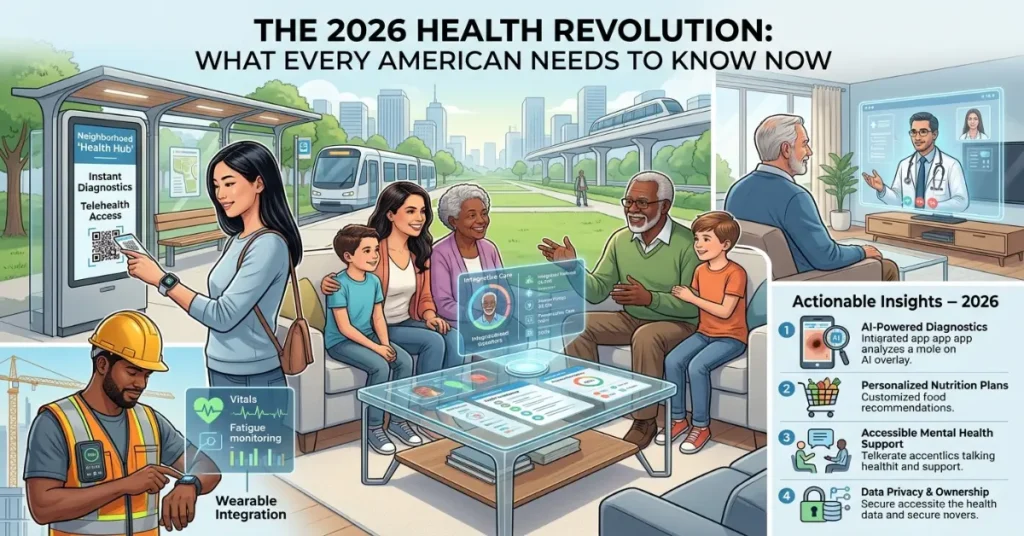
According to Prenuvo’s health trend report (2026), annual testing is becoming the norm – not just a one-time physical, but detailed bloodwork panels, metabolic markers, and even proactive full-body scans. The American Association of Nurse Practitioners (AANP, 2026) highlights wearable health technology as a major force, with devices now capable of detecting irregularities in sleep, heart rhythm, and blood oxygen levels before symptoms appear.
Preventive care is no longer just smart – it’s accessible. And catching a problem early is almost always cheaper, less invasive, and more survivable than treating it late.
What you should do: Schedule a comprehensive blood panel if you haven’t had one in over a year. Track your sleep and resting heart rate with a wearable. Know your numbers – blood pressure, fasting glucose, cholesterol – the way you know your Wi-Fi password.
Mental Health Is Physical Health – Period
The U.S. Surgeon General has been saying it for years, and 2026 is the year mainstream healthcare is finally fully listening: mental health is not separate from physical health. Chronic stress, anxiety, and depression are directly linked to inflammation, cardiovascular disease, immune dysfunction, and even gut health.
According to Project Hope’s 2026 health issues report, mental health continues to surge as one of the defining public health challenges facing Americans this year. Employers are expanding mental health benefits. Telehealth therapy platforms have exploded. And the stigma – while not gone – is eroding faster than ever.
What you should do: Treat your mental health like a vital sign. Prioritize sleep (7-9 hours), limit alcohol, move your body daily, and don’t wait until you’re in crisis to reach out for support. Resources like the 988 Suicide & Crisis Lifeline are free, confidential, and available 24/7.
The Bottom Line: Your Health, Your Move
2026 is not the year to be passive about your health. GLP-1 breakthroughs are offering new hope to millions. Ultra-processed foods are finally being called out for what they are. Preventive care is becoming standard. And mental health is getting the mainstream recognition it’s always deserved.
The question isn’t whether these trends affect you – they do. The question is what you’re going to do with that information.
Start somewhere. Start today.
📚 References
- Gonzalez-Rellan, M.J. et al. (2025). The expanding benefits of GLP-1 medicines. PMC/National Institutes of Health. https://pmc.ncbi.nlm.nih.gov/
- Cornell University. (June 2026). Americans agree: Ultraprocessed foods pose major health hazard. Cornell Chronicle. https://news.cornell.edu
- Tufts University. (June 2026). It May Not Just Be What’s in Ultra-Processed Foods, but How They’re Made. Tufts Now. https://now.tufts.edu
- JAMA Network Open / NIH. (2026). National Institutes of Health-Supported Research on Ultra-Processed Foods. https://jamanetwork.com
- American Association of Nurse Practitioners. (2026). Top Five Health Care Trends for 2026. https://www.aanp.org
- Project Hope. (June 2026). 6 Health Issues We’re Watching in 2026. https://www.projecthope.org
- Prenuvo. (2026). 11 Exploding Health Trends You May See in 2026. https://prenuvo.com
- US News Health. (January 2026). Top Health and Nutrition Trends for 2026. https://health.usnews.com