Sunday night usually goes one of two ways. You either spend 20 minutes deciding what to eat, grab whatever is fastest, and promise yourself you will do better tomorrow, or you open the fridge and see meals that already match your goals. That is why meal prep for weight loss works so well. It reduces guesswork, cuts down on impulse eating, and helps you stay consistent when motivation is low.
The biggest advantage is not perfection. It is predictability. When your meals are planned ahead, you are less likely to skip lunch, overeat at dinner, or rely on snacks that leave you hungry an hour later. For most people, weight loss gets easier when healthy choices become the default instead of a daily debate.
Why meal prep for weight loss works
Weight loss usually comes down to eating in a way that helps you stay in a calorie deficit without feeling miserable. Meal prep supports that by making portion control easier and reducing the number of food decisions you have to make. Fewer decisions often means fewer opportunities to drift off track.
It also helps you build meals around foods that keep you full. A good prep routine usually includes lean protein, high-fiber carbs, healthy fats, and vegetables. That mix matters because a lunch built around protein and fiber will generally keep you satisfied longer than a random pastry or a takeout meal loaded with refined carbs and low in protein.
There is also a money and time benefit. Ordering food several times a week can quietly add up, and it often makes portions larger than you intended. Cooking at home gives you more control over ingredients, sodium, oils, and serving sizes. That control does not guarantee weight loss, but it makes it much easier to stay aligned with your goals.
Start with a simple plan, not a perfect one
A common mistake is trying to prep every meal, every snack, and every bite for the next seven days. That sounds organized, but it can become overwhelming fast. A better approach is to prep the meals that usually cause you the most trouble.
For one person, that might be lunch at work. For someone else, it is weekday dinners after a long day. If breakfast is already easy, you do not need to fix what is not broken. Focus on the 1 or 2 meals where you tend to make less helpful choices.
It also helps to repeat meals more than you think you need to. Variety is nice, but too much variety can make meal prep expensive, time-consuming, and harder to maintain. There is nothing wrong with eating the same lunch three or four times in one week if it saves time and helps you stay consistent.
Build meals that support fat loss and fullness
The easiest way to prep for weight loss is to use a simple meal formula. Start with protein, add vegetables, include a smart carb, and finish with a controlled amount of healthy fat. This keeps meals balanced without turning every container into a math problem.
Protein should do most of the heavy lifting. Chicken breast, turkey, tuna, salmon, eggs, Greek yogurt, tofu, cottage cheese, shrimp, and lean ground beef are all useful options. Protein helps preserve muscle during weight loss and tends to be more satisfying than meals built mostly around starch.
Vegetables add volume without a lot of calories. Roasted broccoli, green beans, zucchini, peppers, cauliflower, spinach, and mixed salad greens work well because they are versatile and easy to portion. If you hate a certain vegetable, do not force it. Meal prep only works if you actually want to eat what you made.
Carbs are not the enemy, but portion size matters. Rice, potatoes, oats, beans, quinoa, fruit, and whole grain pasta can all fit into a weight loss plan. The goal is not to eliminate carbs. The goal is to use them intentionally so meals feel satisfying instead of oversized.
Healthy fats matter too, but they are easy to overdo. Avocado, olive oil, nuts, seeds, and nut butter are nutritious, but calories add up quickly. A small amount can improve flavor and fullness. A large amount can quietly push meals beyond what you planned.
A practical meal prep strategy for beginners
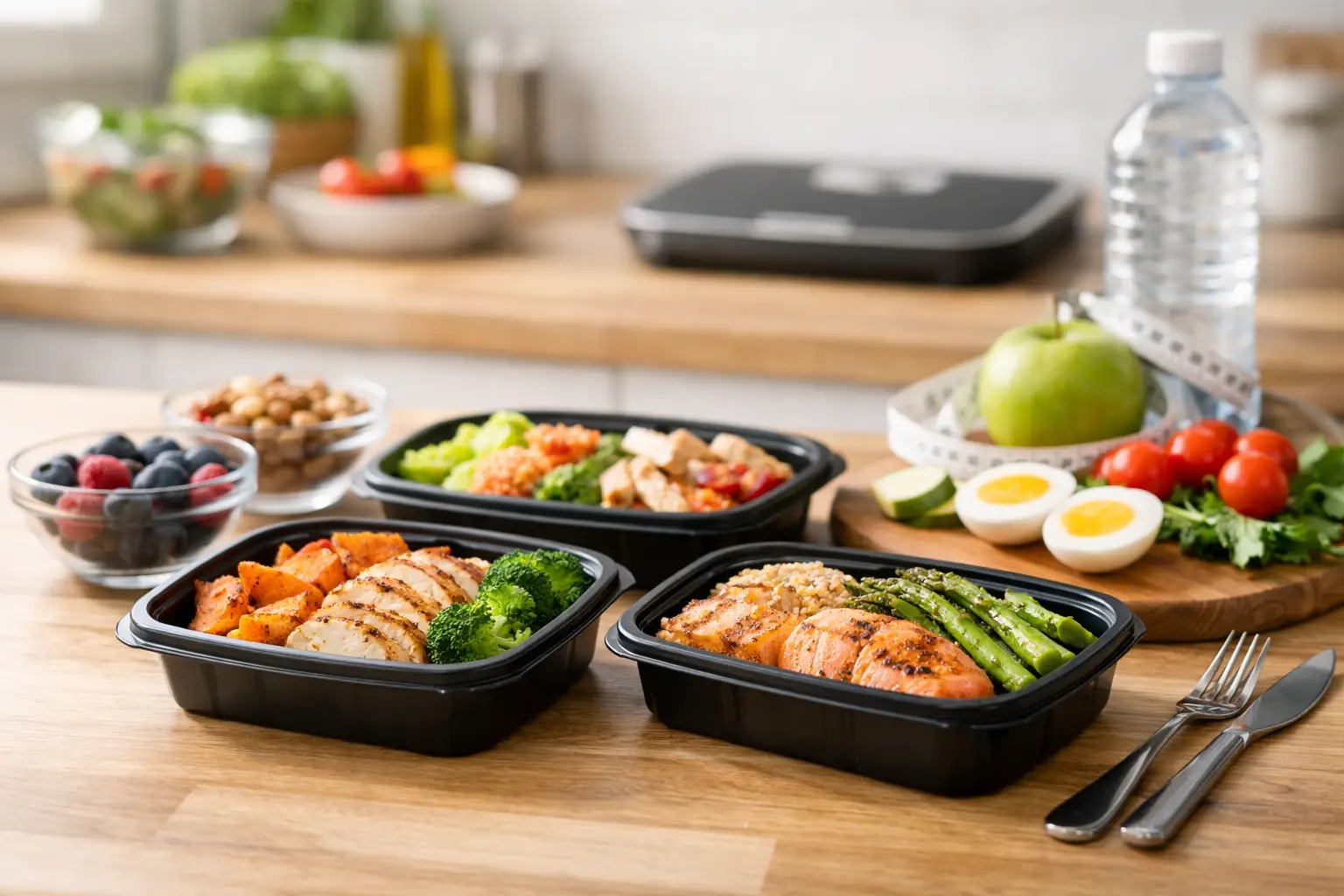
If you are new to this, think in batches instead of recipes. Cook 2 proteins, 2 vegetables, and 1 or 2 carb sources. Then mix and match them into different meals. This gives you structure without making every lunch taste exactly the same.
For example, you could cook grilled chicken and turkey meatballs, roast broccoli and carrots, and make a batch of rice and roasted potatoes. From there, you can build bowls, plates, wraps, or salads depending on what sounds good that day. This kind of flexible prep is often easier to stick with than fully assembled meals for every single day.
Breakfast can stay simple. Overnight oats with Greek yogurt, egg muffins with vegetables, or pre-portioned cottage cheese with fruit all work well. The best choice is the one you will actually eat instead of skipping breakfast and getting overly hungry later.
Snacks deserve some planning too. Many people do fine with three balanced meals and no snacks, while others need a small bridge between meals. It depends on your schedule, hunger level, and activity. Good prep-friendly snacks include hard-boiled eggs, Greek yogurt, fruit, string cheese, cut vegetables, or a measured portion of nuts.
Portion control matters, but so does satisfaction
Meal prep can support weight loss, but only if the meals are realistic. If every container is tiny, bland, and leaves you hungry, you will probably end up eating extra later. That is why volume and satisfaction matter just as much as calorie awareness.
Use larger portions of low-calorie foods like vegetables and salad greens. Keep protein portions generous enough to help with fullness. Be more measured with calorie-dense extras like dressings, shredded cheese, oils, and sauces. You do not need to eliminate flavor, but you do need to be honest about how quickly small add-ons can change the total meal.
This is where it depends on the person. Someone who is very active may need larger carb portions than someone with a desk job. Someone with a history of overeating at night may do better with a bigger dinner. Someone who gets bored easily might need two different lunch options in the fridge. The best meal prep plan is the one you can repeat next week.
Common meal prep mistakes that slow progress
One mistake is relying too heavily on foods labeled healthy while ignoring calories and portions. Smoothies, granola, wraps, protein bars, and nut butters can all fit into a plan, but they can also become easy ways to eat more than you realize.
Another mistake is prepping meals that do not match your real schedule. If you know you eat out every Friday night with family, do not prep a Friday dinner that will go to waste. If Wednesdays are chaotic, that might be the day you need your easiest meal, not your most ambitious one.
A third mistake is making the process too complicated. You do not need ten matching containers, a color-coded calendar, and a chef-level recipe collection. You need a few dependable meals, basic ingredients, and a routine you can manage even on a busy week.
How to make meal prep easier to maintain
Keep a short list of go-to meals that are fast, affordable, and filling. Think taco bowls with lean meat and rice, sheet pan chicken with vegetables, egg-based breakfasts, or yogurt bowls with berries and oats. Repeating a few reliable meals reduces stress and saves mental energy.
Use convenience foods strategically. Pre-washed greens, frozen vegetables, rotisserie chicken, canned beans, microwaveable rice, and chopped produce can save time without ruining your results. Homemade does not have to mean everything starts from scratch.
It also helps to leave a little room for normal life. Meal prep for weight loss should give you structure, not make you feel trapped. If you want one meal out during the week, plan for it. If you prefer to prep only on weekdays and keep weekends looser, that can still work. Consistency beats rigidity.
Meal prep for weight loss is really about reducing friction
Most people do not fail because they lack information. They fail because healthy choices become too inconvenient when life gets busy. Meal prep solves that problem by making the next good decision easier than the less helpful one.
You do not need a perfect system to make progress. Start with a few meals, keep portions realistic, and build your week around foods that leave you full and satisfied. When your fridge starts working for your goals instead of against them, weight loss feels a lot more doable.
Give yourself permission to keep it simple. A well-prepped week is not about eating like a fitness model. It is about creating enough structure to help the healthier choice happen almost automatically.